Bridging the Levels: A Bespoke First for Coulson’s Bridges
Set within a beautiful private garden in Norfolk, this project presented Coulson’s Bridges with an unusual challenge: to create an elegant pedestrian bridge providing access to an island surrounded by a moat, while accommodating an 800mm difference in ground level between the two sides.
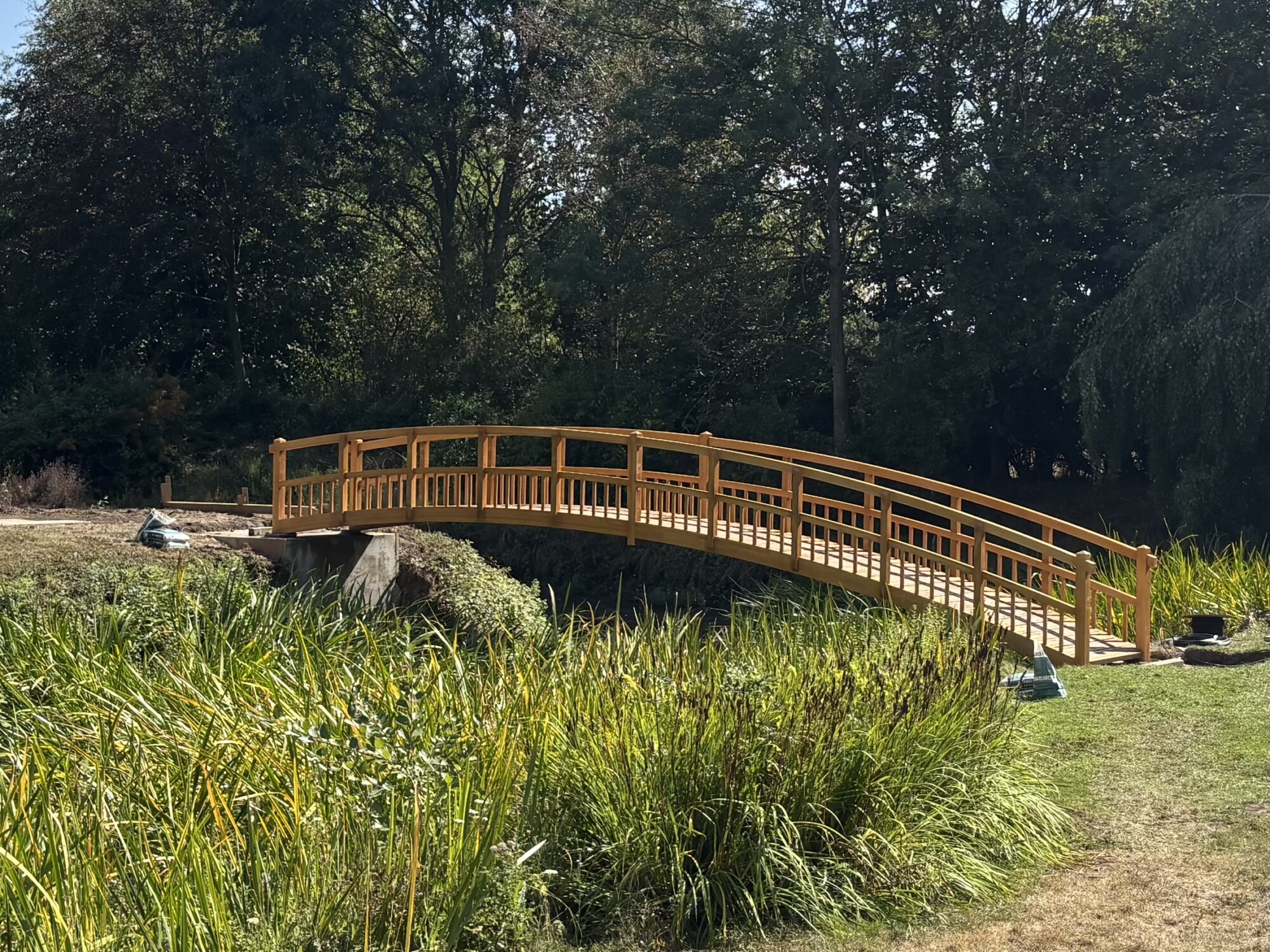
The solution was a completely bespoke asymmetric version of our Edinburgh-style bridge – and the first asymmetric bridge we have ever built.
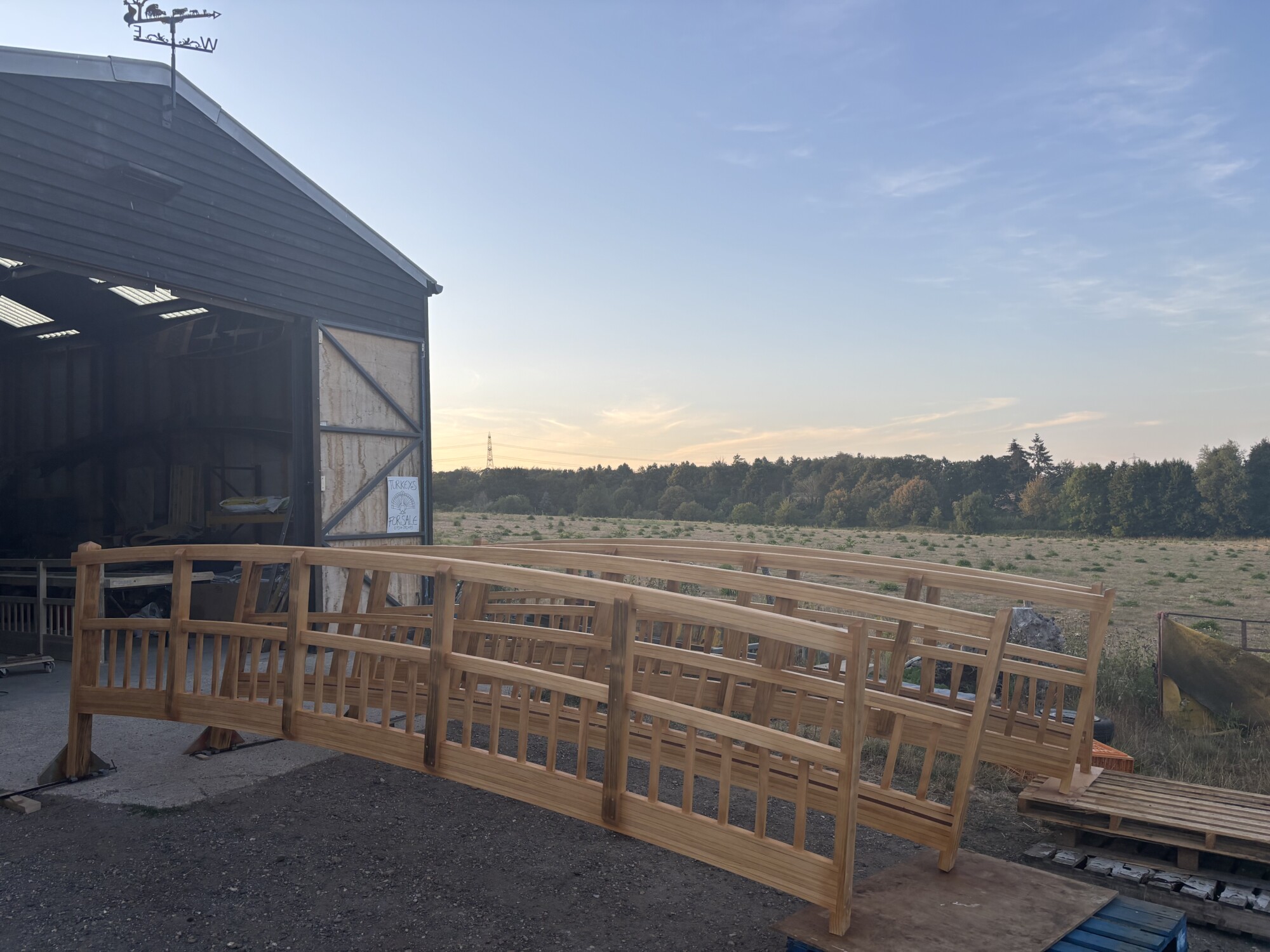
At approximately 10 metres long and 1.2 metres wide, the finished bridge combines the sweeping lines and traditional craftsmanship of our Edinburgh design with a specially developed asymmetric profile tailored precisely to its setting.
Fully Bespoke
No two locations are exactly alike, and occasionally a project calls for something we have never built before.
With one side of the moat approximately 800mm higher than the other, a conventional symmetrical bridge wasn’t the right solution. Instead, we adapted our Edinburgh design to create an asymmetric bridge that rises naturally from one bank before flowing gracefully across to the other.
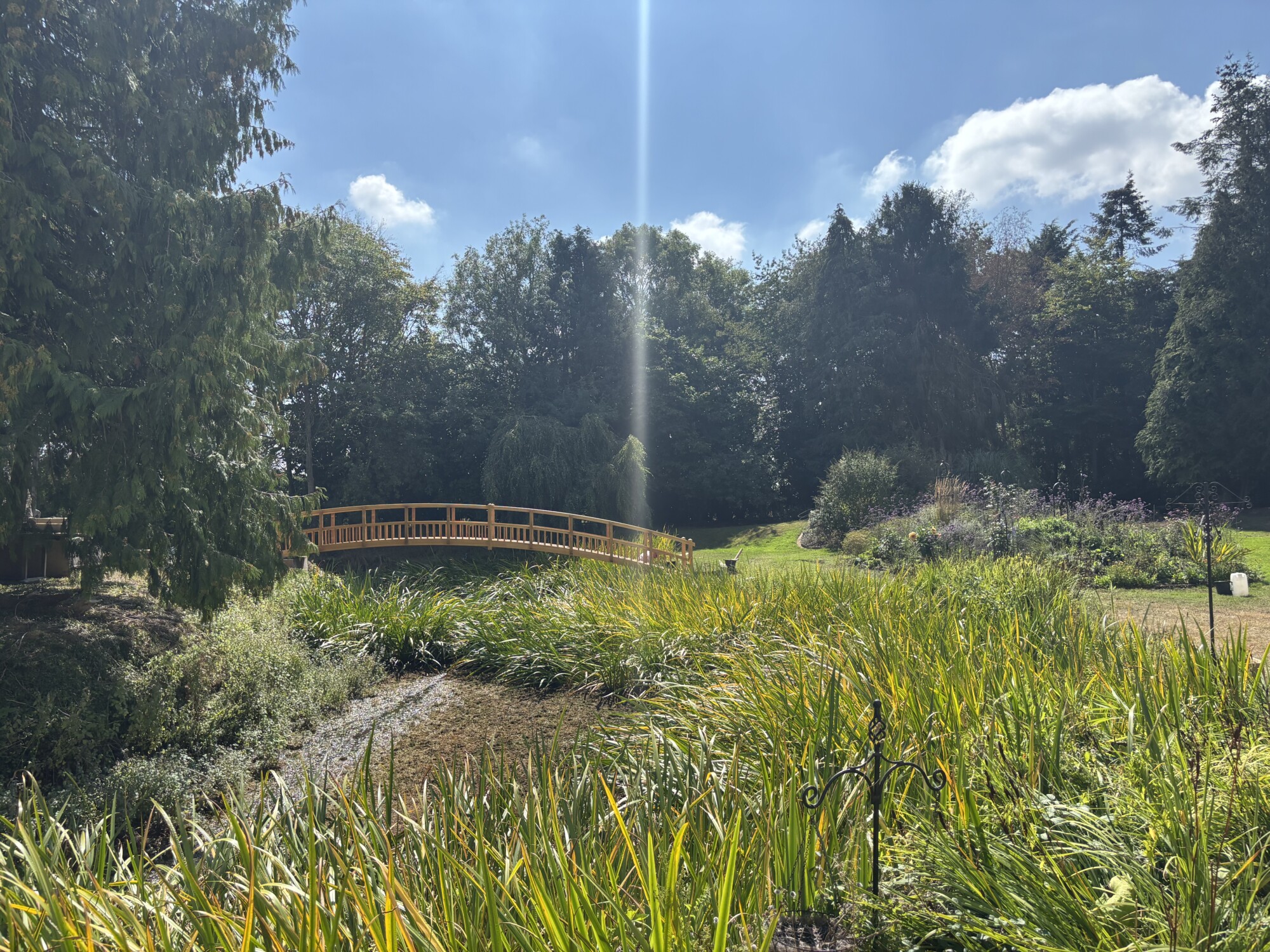
Every element was designed around the location, creating a bridge that looks as though it has always belonged within the landscape.
Tradition, Trust & Expertise
Although this was a first for Coulson’s Bridges, it drew upon the traditional bridge-building skills and experience that underpin all of our work.
The main bridge was handcrafted from Accoya, chosen for its exceptional durability and suitability for demanding outdoor environments. The bridge was finished in a Heritage Oak wood stain, giving the structure a rich, warm appearance that sits beautifully amongst the mature trees, planting and water surrounding the island.
Pressure-treated softwood decking was used for the walkway, incorporating GripDeck inserts to provide additional grip underfoot and create a practical surface for year-round use.
Excellence at Every Step
From the initial design through to manufacture, the bridge was created specifically for this individual location.
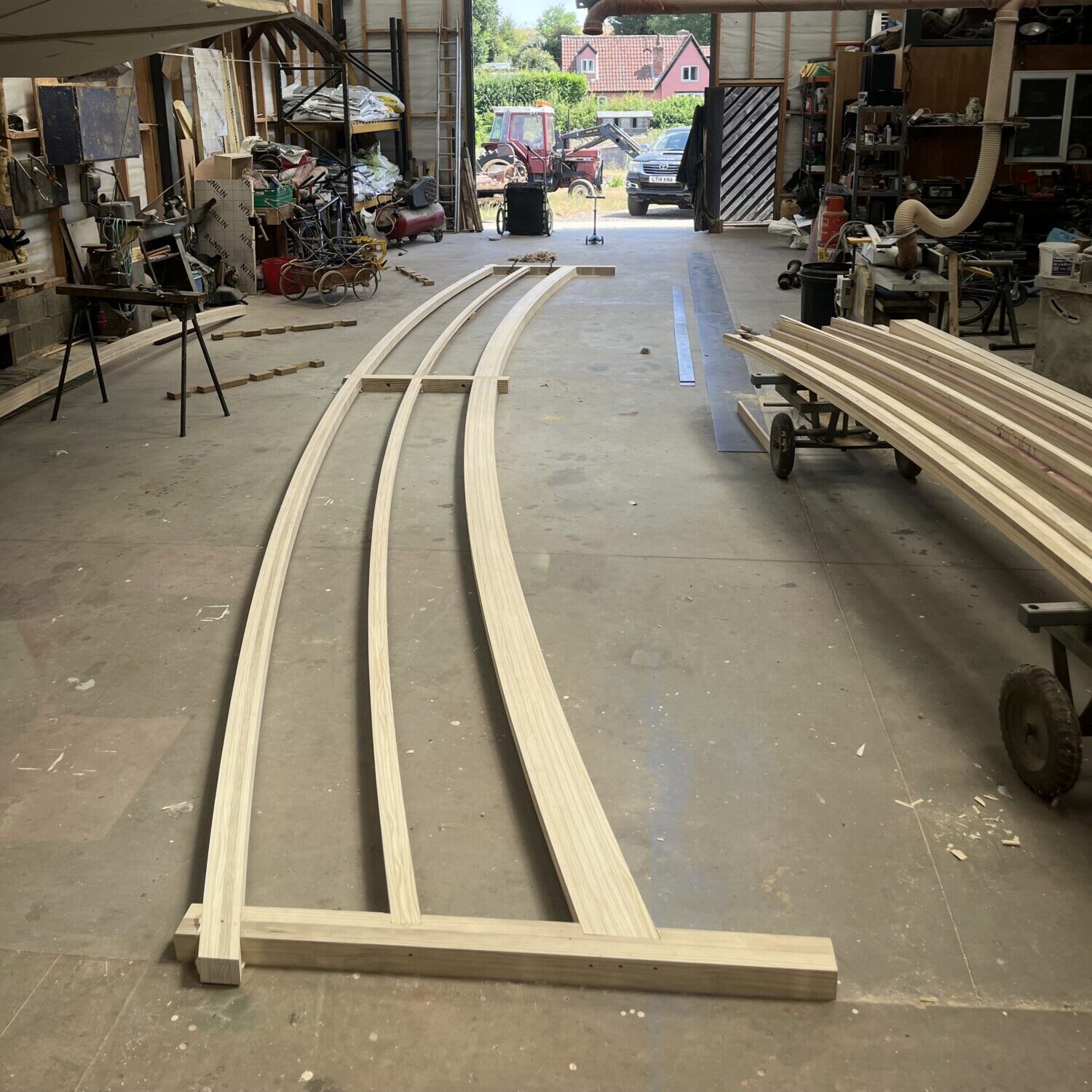
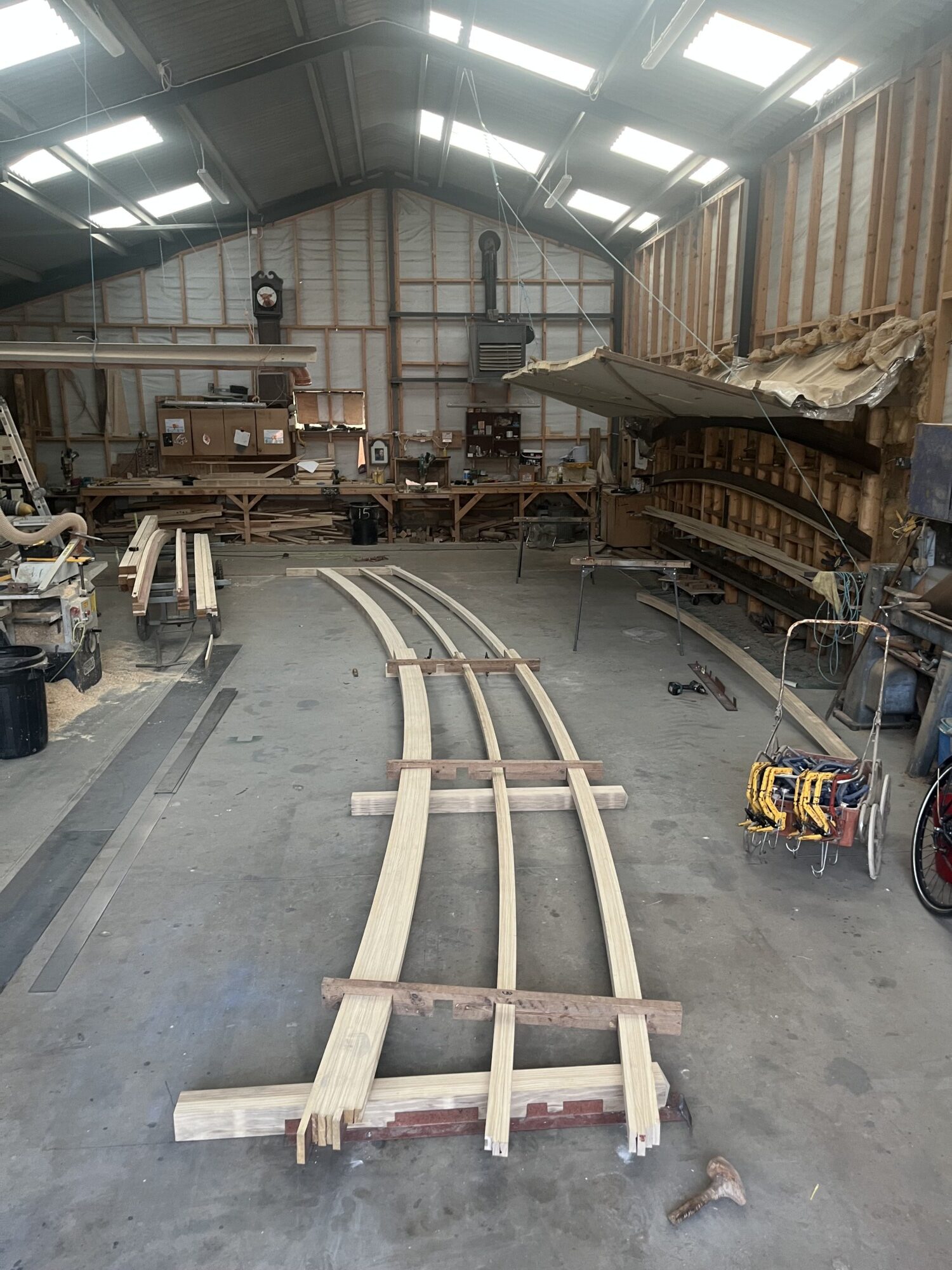
The curved components were formed and assembled in our workshop, allowing the asymmetric geometry and flowing handrails to be carefully developed before the bridge was transported to Norfolk.
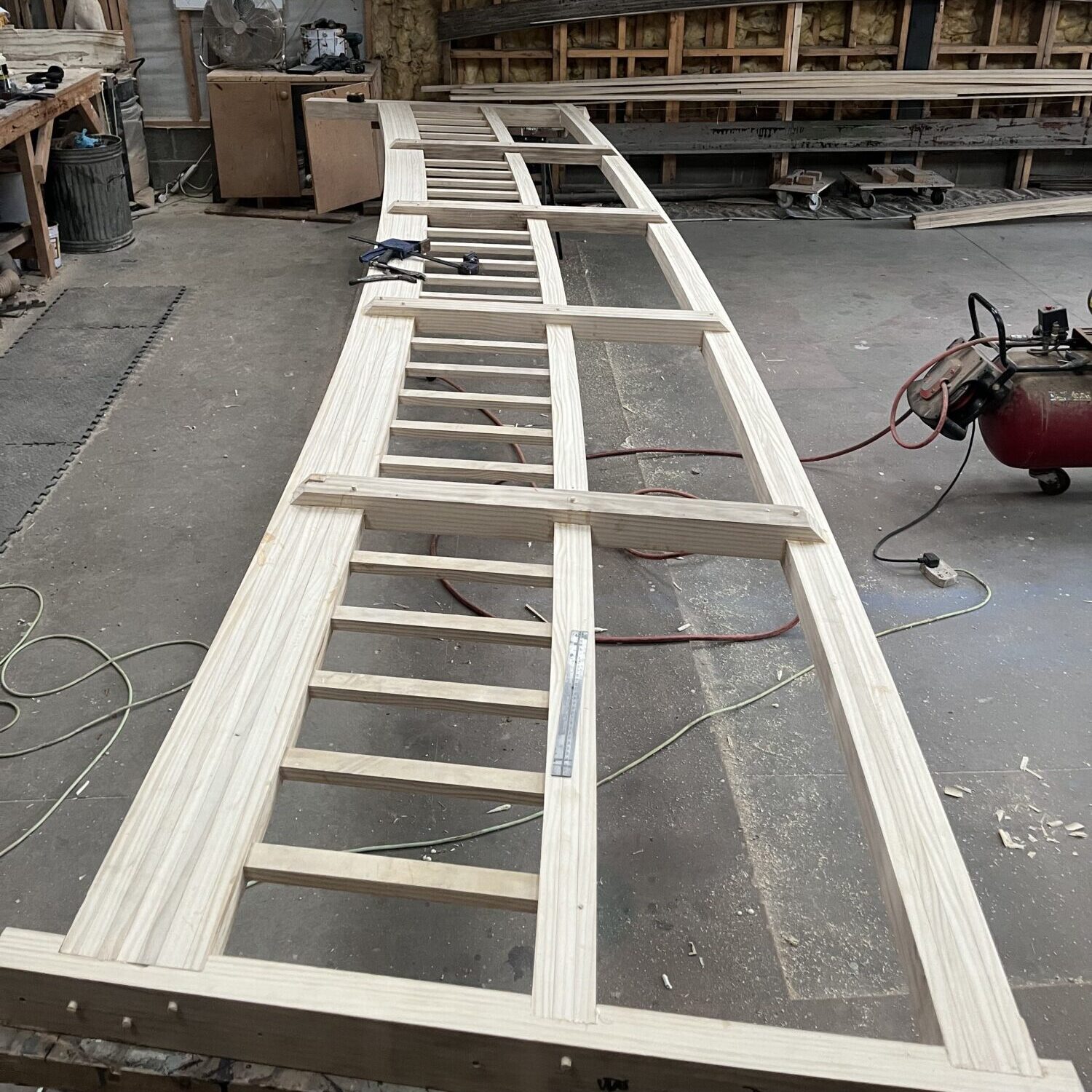
The workshop photographs provide a fascinating look behind the scenes, showing the long curved timber components taking shape before the balustrades, posts and handrails were brought together to create the finished structure.
The Problem
The client wanted to create convenient pedestrian access to an island within their garden.
The island is surrounded by a moat, but the two landing points were at significantly different heights. With an 800mm rise from one side to the other, an ordinary level or symmetrical arched bridge would not have worked naturally with the landscape.
The bridge also needed to complement its surroundings. In such an attractive garden setting, this couldn’t simply be a functional crossing – it needed to become part of the garden itself.
The Solution
We developed a bespoke asymmetric Edinburgh-style bridge, designed specifically to accommodate the difference in levels.
At approximately 10m long and 1.2m wide, the bridge gradually rises from the lower bank while retaining the elegant curved profile and detailed timber balustrades characteristic of the Edinburgh design.
Creating our first asymmetric bridge required careful consideration of the geometry throughout the design and manufacturing process. The handrails, structural members and balustrades all needed to follow the changing profile while maintaining the proportions and flowing appearance of the original design.
The result demonstrates one of the great advantages of choosing a genuinely bespoke timber bridge: rather than altering the landscape to suit a standard product, we can design the bridge to suit the landscape.
Crafting the Bridge
The bridge was manufactured from Accoya, with each of the curved components formed to create the distinctive asymmetric profile.
Once the principal structural components had been produced, the balustrades, posts and sweeping handrails were assembled and checked in our workshop.
A Heritage Oak stain was then used to bring warmth and depth to the timber while complementing the natural colours of the surrounding garden.
Pressure-treated softwood decking with GripDeck inserts completed the structure, providing a durable and practical walking surface.
Installation
For this project, the client chose to undertake the installation themselves whilst we were on site to help out and offer advice.
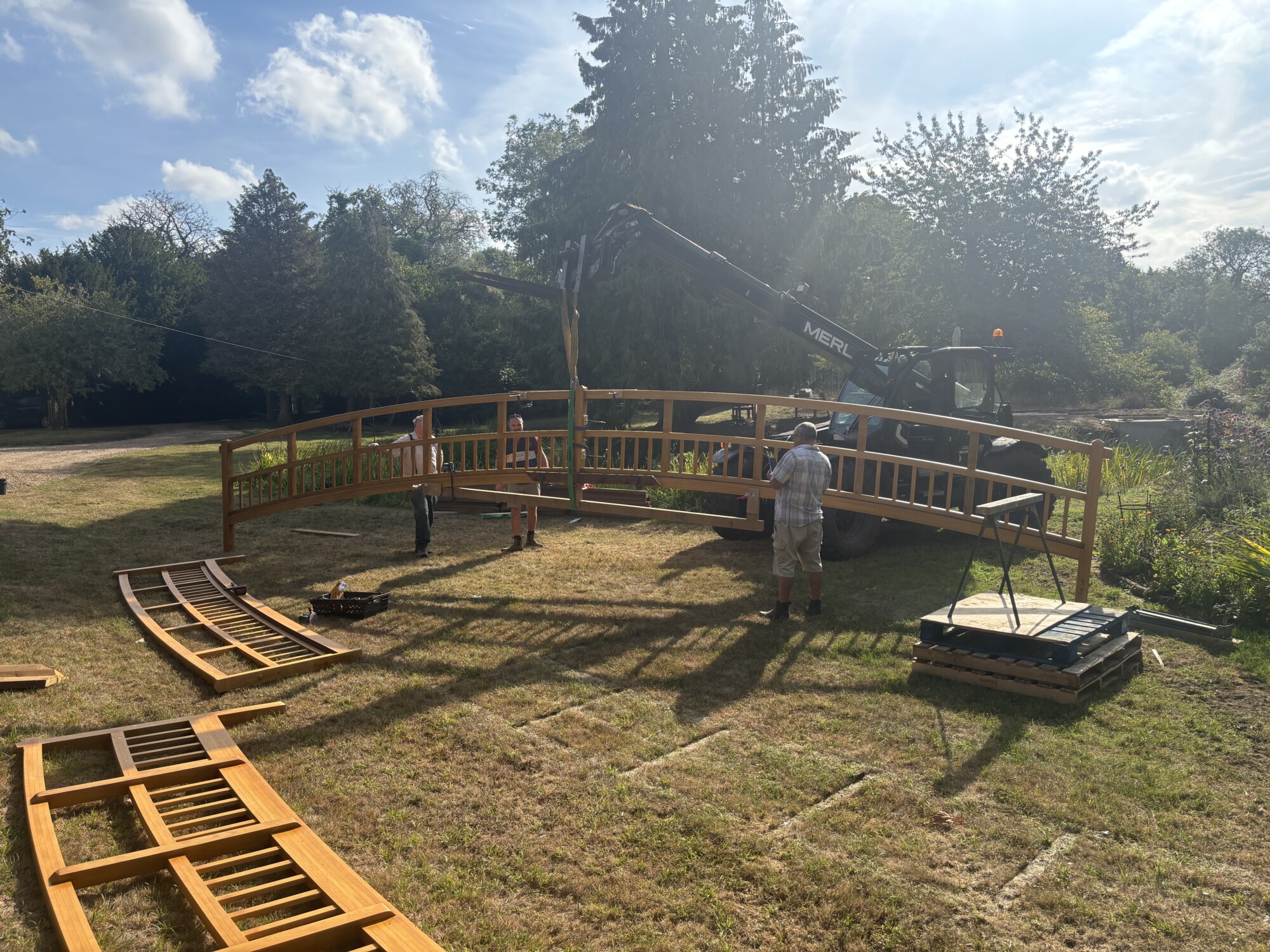
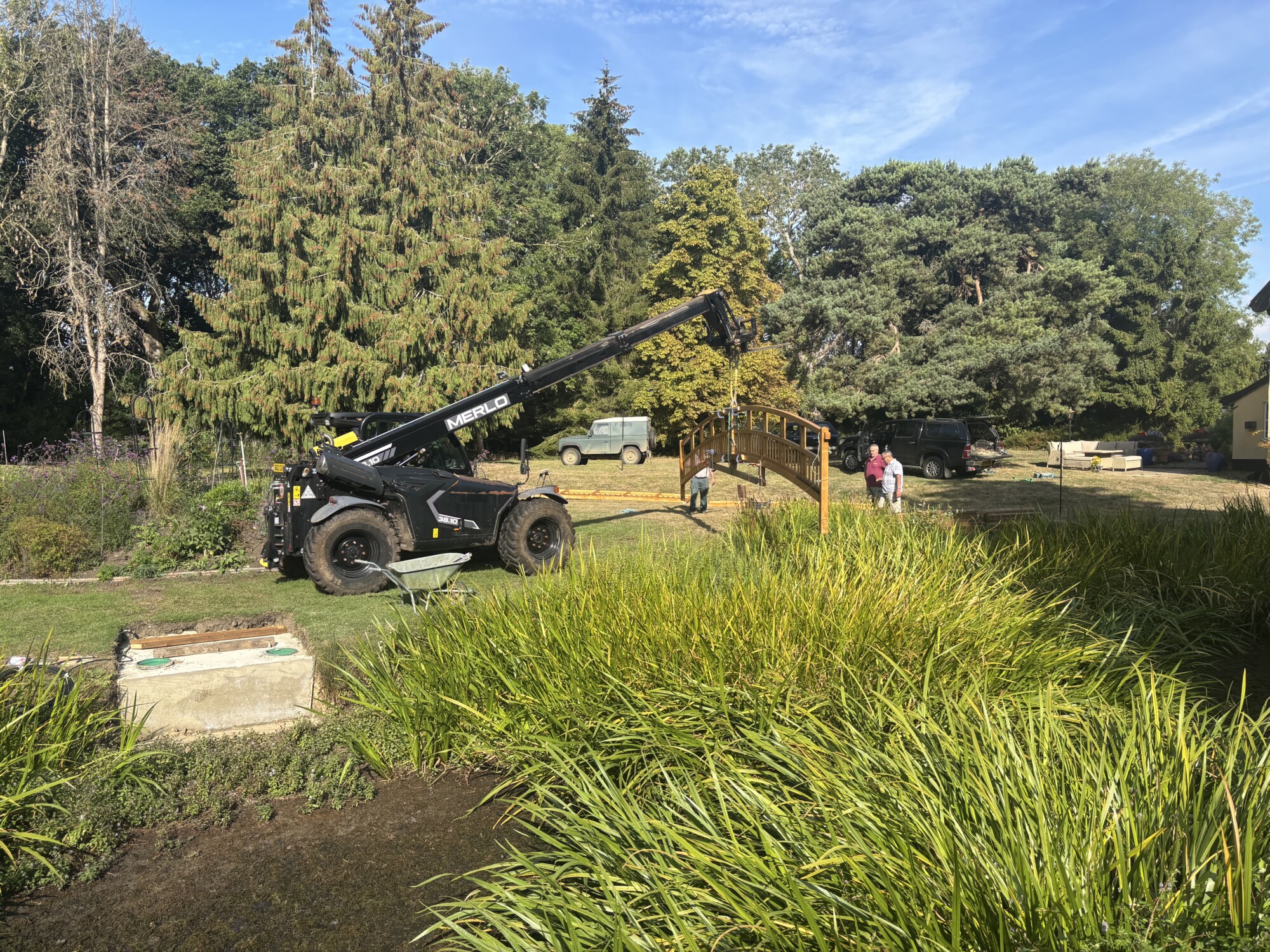
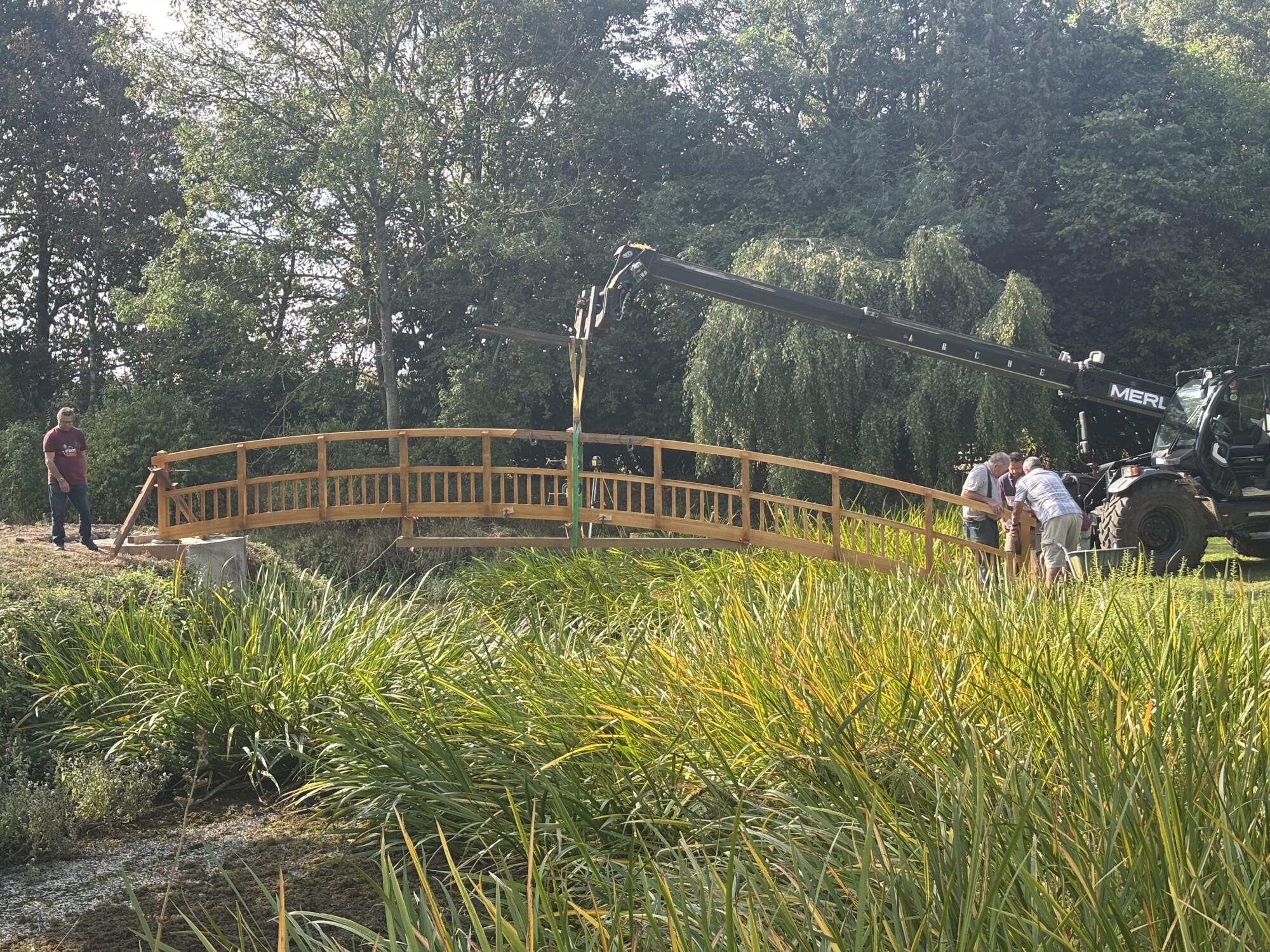
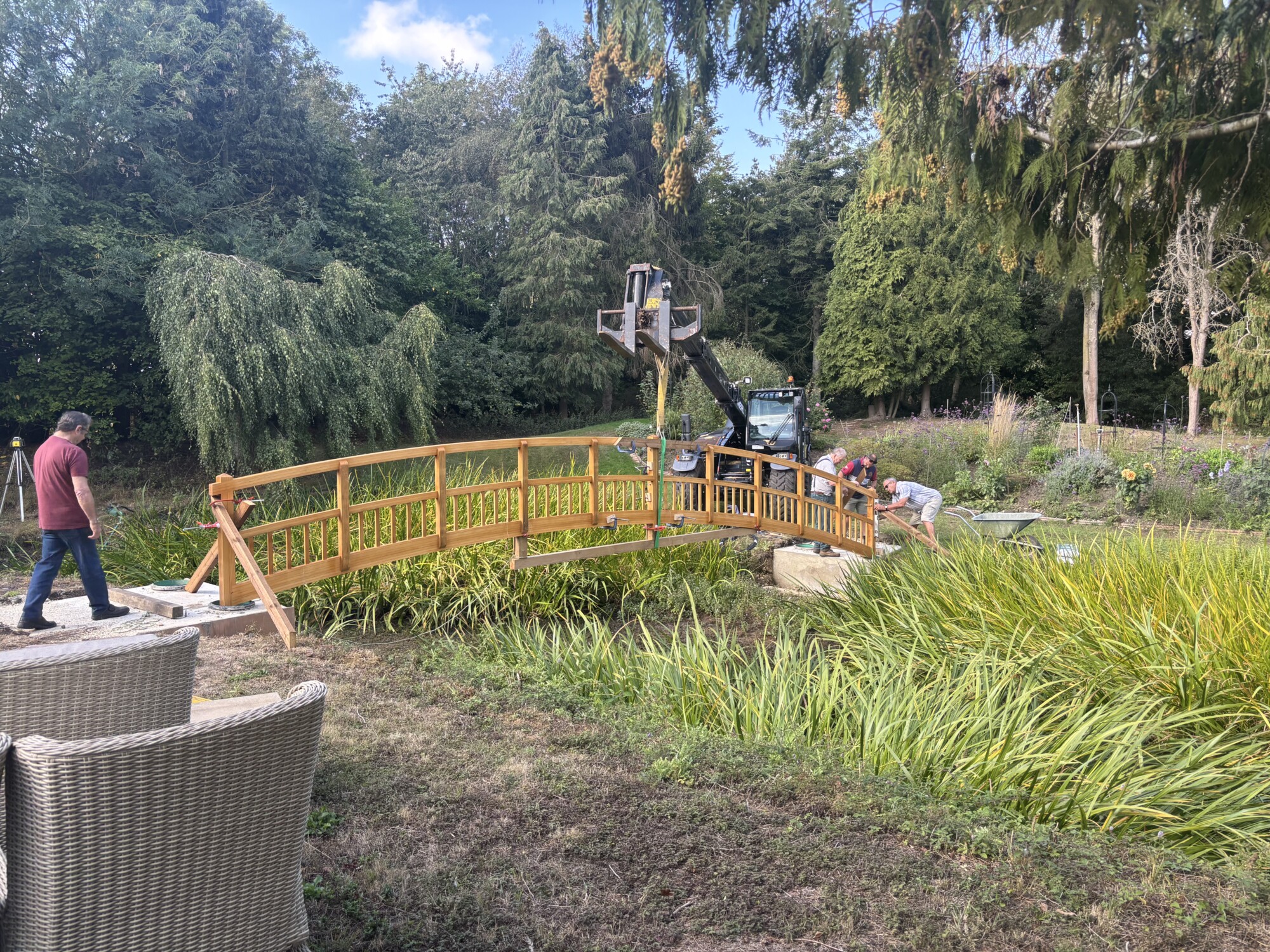
With the bridge delivered to site, a telehandler was used to carefully lift and position the substantial structure across the moat. Coulson’s Bridges provided help and advice during the process, ensuring the installation could be completed successfully.
The installation photographs capture one of the most satisfying stages of any bespoke bridge project: seeing something that has been designed and handcrafted in the workshop finally lowered into the landscape it was created for.
The Result
The completed bridge provides exactly the access the client required while adding an entirely new architectural feature to the garden.
Its long, sweeping asymmetric profile follows the changing ground levels naturally, while the warm Heritage Oak finish sits beautifully against the surrounding mature woodland and waterside planting.
What began as a practical requirement to reach an island has become something much more – a beautiful, practical and completely bespoke piece of garden furniture.
Most importantly, the client was delighted with the finished bridge, particularly the quality of the craftsmanship and the service received throughout the project.
For us, the project also represents an exciting milestone: the first asymmetric bridge ever produced by Coulson’s Bridges – and hopefully not the last.
Conclusion
This Norfolk project is a perfect example of what bespoke bridge design can achieve.
An unusual site, an 800mm difference in levels and the requirement for a substantial 10-metre crossing called for something outside our standard designs. By adapting our Edinburgh bridge and combining traditional craftsmanship with a completely bespoke asymmetric profile, we were able to produce a solution unique to both the client and their garden.
The finished bridge doesn’t simply cross the moat. It has become a focal point within the landscape.
Could We Create Something Similar for Your Garden?
Whether you need to cross a stream, pond, lake, moat or another landscape feature, Coulson’s Bridges can design and manufacture a bridge specifically for your location.
From adaptations of our established bridge designs to completely bespoke structures, we’ll work with you from the initial idea through to the finished bridge.
Contact Coulson’s Bridges to discuss your project.